
The sizes at a glance
| Precut | Piece size | Typical count | About how much fabric |
|---|---|---|---|
| Layer cake | 10 × 10 in | 42 | 2¾ yd |
| Charm pack | 5 × 5 in | 42 | ¾ yd |
| Mini charm pack | 2½ × 2½ in | 42 | ¼ yd |
| Jelly roll | 2½ in × width of fabric (about 42 to 44 in) | 40 | 2¾ yd |
| Honey bun | 1½ in × width of fabric | usually 40 | 1⅔ yd |
| Dessert roll | 5 in × width of fabric | usually 20 | 2¾ yd |
| Turnover | 6-in half-square triangles | usually 80 | |
| Fat quarter bundle | about 18 × 21 in each | varies, often one of every print | ¼ yd per piece |
| Fat eighth bundle | about 9 × 21 in each | varies | ⅛ yd per piece |
Sources: Moda's Precut 411 and Moda blog posts give the 42-piece counts for layer cakes, charm packs and mini charms and 40 strips for a jelly roll. The counts for the less common precuts and the yardage equivalents come from Bear Creek Quilting Company's precut guide. Fat Quarter Shop's specialty cuts guide notes that counts can vary by collection, and Bear Creek says sizes and quantities vary by manufacturer. Count a pack before you cut into it.
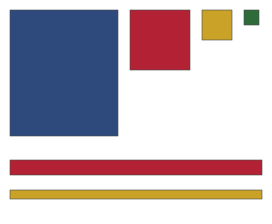
The four square sizes scale neatly. Moda points out that you'd need 4 charm packs or 16 mini charm packs to cover the same area as one layer cake, and the arithmetic agrees: a 10-inch square is four 5-inch squares or sixteen 2½-inch squares.
Jelly rolls
Forty 2½-inch strips is about 2¾ yards of fabric, and every strip is already the width most quilters use for binding. That makes jelly rolls good for strip-pieced designs:
- The jelly roll race quilt uses one 40-strip roll for a top about 49 × 64 inches.
- The rail fence quilt is built from three 2½-inch strips per block and has a jelly roll option.
- Leftover strips make a scrappy binding; join them with diagonal seams as in how to bind a quilt.
Layer cakes
Ten-inch squares are big enough to cut into many shapes. Two layer cake squares with right sides together make eight half-square triangles in one go, and a single square cuts into four charm-size squares. The simplest use is to sew them as they come: our one-layer-cake throw uses all 42 squares plus a border for a 64 × 73 inch quilt.
Charm packs and mini charms
A 5-inch charm square finishes at 4½ inches once it's sewn on all four sides. One pack alone makes only a doll or table quilt, so most charm patterns use two or more packs or add background fabric.
- The charm pack zigzag quilt turns two packs into 168 half-square triangles for a 56 × 64 inch throw.
- The disappearing nine-patch starts from charm squares sewn into nine-patches.
- Mini charms (2½ in) suit tiny projects like a mug rug or the postage stamp quilt.
Fat quarter bundles
A fat quarter bundle gives you the biggest pieces of any precut. It's the most flexible choice when a pattern needs large patches or several pieces of the same print. The fat quarter brick quilt takes 14 fat quarters, and the fat quarter guide has a cutting chart for one piece.
Working with pinked edges
Most precuts are cut with a pinking blade, so the edges have a zigzag. The American Sewing Guild's article on working with pre-cuts says to measure the seam allowance from the peaks of the zigzag, not the valleys. The difference is small on one seam, but across six or eight seams in a row it adds up to a row that comes out short.
Two habits help:
- Pick one reference point, the outer tips, and use it for every seam in the quilt.
- Check one finished block against its intended size before sewing all of them. A charm square sewn into a block should finish at 4½ inches. If yours finish at 4⅝, your seam is too narrow; at 4⅜, too wide. our quarter-inch seam guide shows how to test it.
Should you prewash precuts?
Usually not. The same ASG article says precuts generally aren't prewashed because the small pieces fray and shed lint. If you must wash them (a fabric you suspect will bleed, or a quilt for someone with sensitive skin), it suggests a mesh bag on a gentle cycle or a soak. Expect a few threads of fraying and slightly smaller pieces afterward, and trim before you sew. Washing the finished quilt with a color catcher is the more common approach; see how to wash a quilt.
Precut or yardage?
Precuts save cutting time and give you a matched set of prints. Yardage is better when a pattern needs a lot of one fabric (a background, sashing or a border) or pieces bigger than the precut. Most precut patterns still call for yardage for the background, border, binding and backing, so read the whole fabric list before you buy.
For a memorial or anniversary quilt with a theme, a single collection in a layer cake or fat quarter bundle gives you a coordinated palette, and you can add a solid for the signature or label areas. The signature quilt guide shows one way to do that.
You might also like
 Quilts of Valor: requirements and how to make oneThe Foundation's size, fabric and label rules in plain English, plus a pattern that fits them.
 One-layer-cake throwAll 42 squares of one layer cake plus a border, a 64 x 73 in throw in an afternoon of sewing.
 How to make a quilt (a beginner's guide)The whole process for a first quilt, from picking fabric to the first wash.
 Quilt batting guide: which batting to useCotton, 80/20, polyester, wool and bamboo compared, with makers' figures for shrinkage and quilting distance.