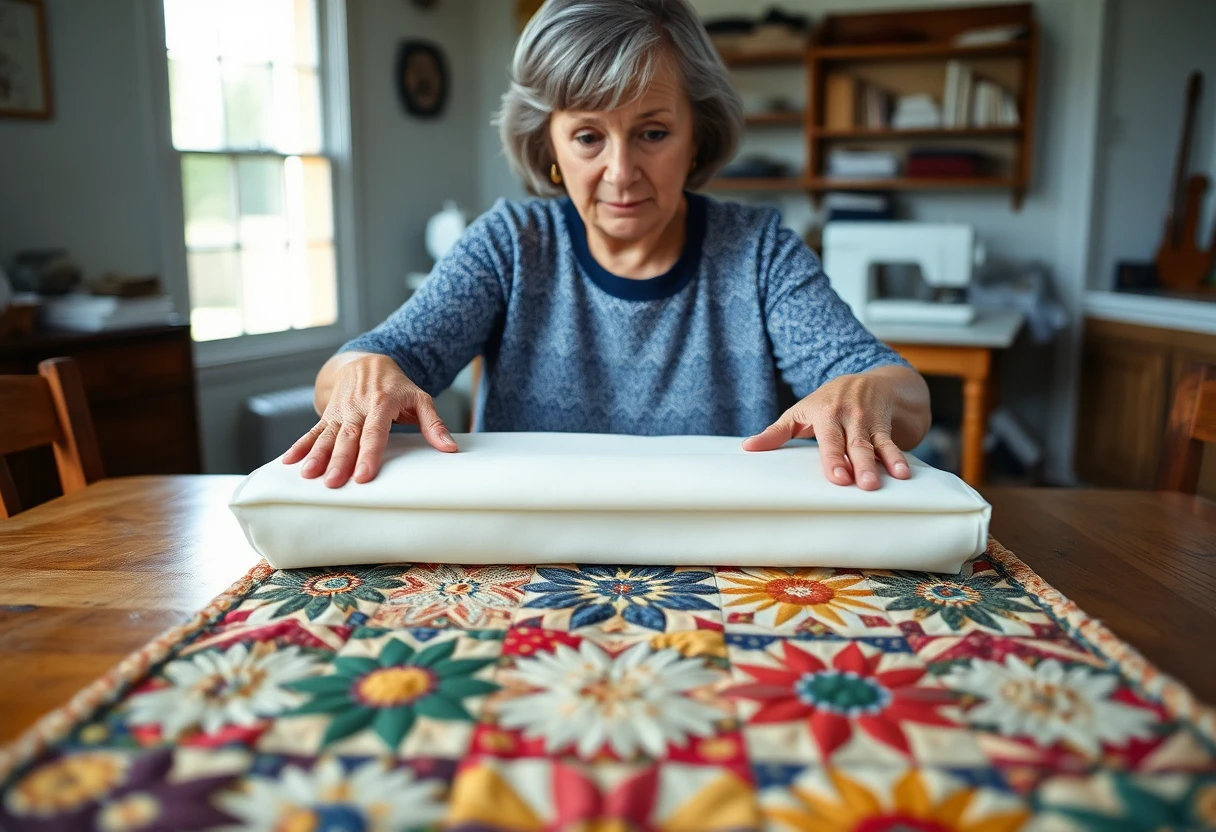
The batting types compared
| Batting | Look and feel | Shrinkage (makers' figures) | Quilt at least every |
|---|---|---|---|
| Cotton, needle-punched on scrim (Warm & Natural) | Flat, firm, a bit stiff at first | About 3% the first wash | 10 in |
| Cotton (Quilters Dream Cotton) | Soft, drapes well; four lofts | About 1% cold wash and air dry; about 3% warm wash and dryer | 8 in |
| 80/20 cotton-poly (Hobbs Heirloom Premium) | Soft, low loft (about ⅛ in) | 3 to 5% | 4 in |
| 80/20 cotton-poly (Quilters Dream 80/20) | Soft, resists creases | Low, says the maker (no figure given) | 8 in |
| Polyester (Quilters Dream Poly) | Light; several lofts | None cold and air dried; about 1% warm and dryer | 12 in |
| Wool (Quilters Dream Wool) | Light, warm, loft about ⅓ in | None listed | 8 in |
| Wool (Hobbs Heirloom Wool) | Light, warm, resists bearding | 3 to 5% | 4 in |
| Bamboo (Quilters Dream Bamboo) | Soft, drapes, breathable | About 3% | 8 in |
Sources, checked October 2026: Warm Company's FAQ, Hobbs' Heirloom 80/20 and Heirloom Wool pages, and the Quilters Dream User Guide and 80/20 page. The table shows why "cotton batting" or "wool batting" isn't enough to go on: two 80/20 battings from two makers differ by 4 inches in quilting distance. Read the package for the one you buy.
Quilting distance: the number to check first
Quilting distance is the largest unstitched space the maker allows. Leave more than that and the batting can shift, bunch or pull apart in the wash. It depends on how the batting is held together: Warm Company explains that Warm & Natural's cotton fibers are needle-punched through a thin scrim, which is what lets its quilting or ties sit up to 10 inches apart.
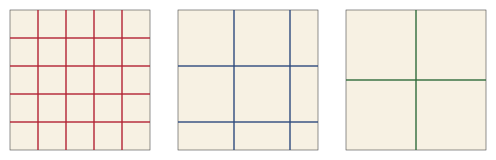
This matters most for tied quilts and for big, open quilting designs. If you plan wide straight lines or a tied comfort quilt, pick a batting rated for 8 to 10 inches. If you love dense free-motion work, any of them will do.
Charity programs often set their own spacing. Quilts for Kids asks that quilting leave no more than about 4 inches unstitched, so hospital laundry doesn't wreck the quilt; see where to donate quilts.
Shrinkage and the antique look
Cotton batting shrinks when the finished quilt is first washed, and the fabric around the stitching puckers into that soft, crinkled look. Polyester barely shrinks, so a poly-batted quilt stays flat.
On a 60 × 80 inch quilt, 3% shrinkage takes it to about 58 × 78 inches, and 5% to 57 × 76. If the finished size matters (a Quilt of Valor near the minimum, or a quilt for a specific bed), use a low-shrink batting or add the difference to your plan.
Don't prewash batting unless the package says to. Hobbs says plainly that pre-washing isn't recommended for any of its battings, and Warm Company advises against machine-washing Warm & Natural before it's quilted. Quilters Dream says no prewashing is needed for its cotton, poly, wool and bamboo.
Which side up?
Some battings have a front and back. Warm Company says Warm & Natural's cotton side, the one with small specks of leaf and stem, faces the quilt top, and the smoother scrim side faces the backing. If a batting has no stated direction, it doesn't matter.
Cutting batting to size
Cut batting and backing about 4 inches bigger than the quilt top on every side, so 8 inches bigger in each direction. A 60 × 80 top needs batting at least 68 × 88. For a longarm quilter, ask first; many want more. StitchTested's backing calculator does the math for any size.
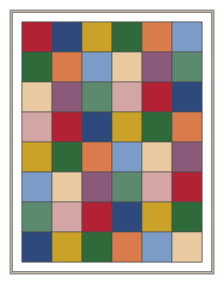
A packaged twin batting, such as Warm & Natural in twin size (72 × 90 inches), covers a top up to 64 × 82 inches with that margin, which includes throws and the recommended 60 × 80 Quilt of Valor.
Unroll batting a day early and lay it flat so the folds relax. Join two leftover pieces by butting the straight edges together and whipstitching or zigzagging across the join without overlapping them.
Picking for the job
- Baby and charity quilts that will be washed a lot: cotton or 80/20, quilted closely. Warm Company and Hobbs both describe their cotton and 80/20 battings as machine washable once quilted.
- A quilt for a hot climate or a summer bed: cotton or bamboo, low loft.
- A warm, light bed quilt: wool. Hobbs suggests a cool, gentle wash and flat drying for its wool batting, so it's less suited to a quilt that will go through a hospital laundry.
- Tied quilts: polyester or a scrim-backed cotton rated for wide spacing. Note that some programs, including Quilts of Valor, don't accept tied quilts.
- Hand quilting: a soft, low-loft cotton, wool or 80/20 needles more easily than a dense scrim batting; see how to hand quilt.
- Dark quilts: the cotton specks in natural batting can show through thin light fabrics. Hobbs recommends its bleached 80/20 for white or light quilts and the natural version for medium and dark fabrics.
Common problems
| Problem | Cause | Fix |
|---|---|---|
| Lumps or empty patches after washing | Quilting farther apart than the batting allows | Add quilting lines before the next wash; next time, check the package spacing |
| Fibers poking through the fabric (bearding) | Loosely bonded batting, or a dull or large needle | Use a new, smaller needle; choose a bonded or scrim batting |
| Quilt smaller than planned | Cotton shrinkage | Plan for 3 to 5%, or use polyester |
| Puckers on the back | Layers not basted well enough | See how to baste a quilt |
Products on this page
Photos and prices come from Amazon and can change.
 Warm and Natural cotton batting, twin 72 x 90Check price on Amazon
You might also like
 Precut fabric guide: jelly rolls, layer cakes, charm packs and moreWhat's in a jelly roll, layer cake, charm pack and the rest, drawn to scale, plus which free patterns use each one.
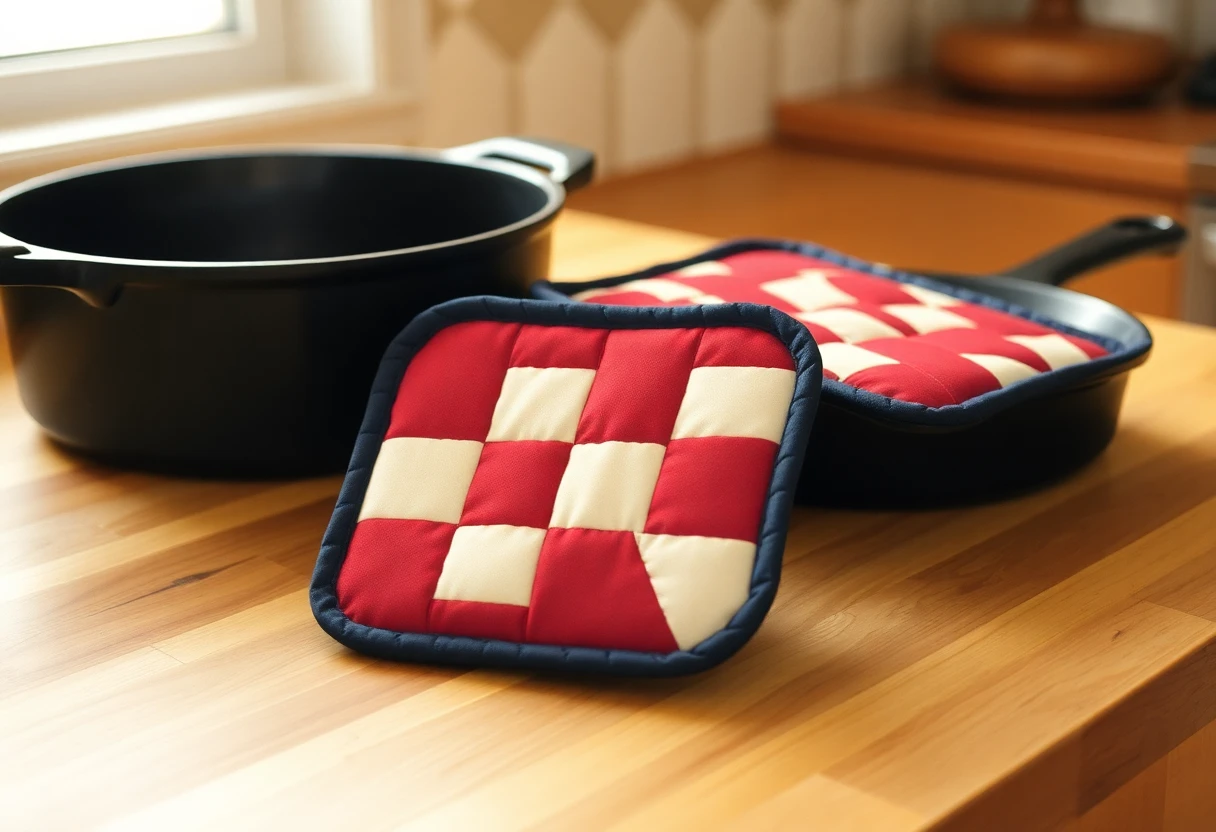 Quilted pot holders with insulated battingA pair of 8-inch four-patch pot holders layered with insulated lining and cotton batting, with safety notes.
 Applique methods comparedFusible raw-edge, needle-turn, freezer paper, back-basting and machine applique stitches, with a table of when to use each.
 How to make a quilt (a beginner's guide)The whole process for a first quilt, from picking fabric to the first wash.