
What you need
Needles: betweens
Hand quilting needles are called betweens. They're short and slightly stiff, which is what makes the rocking stitch possible: a short needle pivots quickly through the layers. Higher numbers are shorter and finer. Quilting Daily's introduction to hand quilting suggests beginners start with a size 8 or 9 and move to a 10 or 12 for smaller stitches later. A John James assorted betweens pack (sizes 3 to 9) lets you try several lengths before settling on one.
Thread
Use thread labeled for hand quilting. It's thicker and stronger than machine piecing thread, and many brands are glazed, a coating that keeps the thread from tangling and fraying as it's pulled through the layers hundreds of times. Glazed thread is for hand use only; Superior Threads warns its glaze can gum up a machine's tension discs and needle. Cotton in ecru or white is traditional, and a contrasting color makes the stitches part of the design. Cut a length about 18 inches long. Longer thread wears thin from being pulled through the quilt and knots more often.
Hoop or frame
A hoop holds a section of the quilt flat while you stitch. Quilting hoops are deeper than embroidery hoops so they fit over all three layers. A 12 to 14-inch hoop is a comfortable size for a lap; the Frank A. Edmunds 12-inch basswood hoop is 1¼ inches deep with a 4-inch tension bolt, according to its listing. Floor frames hold a larger area, or the whole quilt, and leave both hands free; they also take up a room.
Keep the quilt in the hoop slightly slack, not drum-tight. Press the center of the hooped area with your palm: it should give a little. Tight fabric can't be rocked into small stitches.
Thimbles
You push the needle with the middle finger of your sewing hand, hundreds of times an hour, so wear a thimble there. Metal thimbles with deep dimples hold the needle's eye securely; leather ones are more comfortable and give more feel. The Clover Natural Fit leather thimble is shaped to the finger and has no seam where the needle pushes, its listing says. Many quilters also protect the finger underneath the quilt, which feels for the needle tip on each stitch, with a stick-on pad or a thin metal underthimble.
Mark and baste
Mark the quilting design on the top before basting, with a pencil or marker you've tested on a scrap. Then thread-baste the layers in a grid; pins snag the thread and get in the hoop's way. Low-loft cotton or wool batting needles more easily than dense polyester.
Start: pop the knot
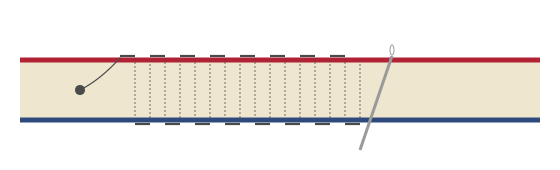
- Tie a small single knot at the end of the thread (a quilter's knot, wrapped around the needle two or three times, is neat and the right size).
- Insert the needle through the top only, about an inch from where you want the first stitch, and run it through the batting to come up at the start point.
- Tug the thread gently until the knot pops through the top fabric into the batting. You'll feel and often hear it. If it won't go through, scratch the hole open slightly with the needle tip; if it pulls all the way out, the knot is too small.
The rocking stitch
- Put your other hand under the hoop, with a fingertip right below where the needle will go.
- Hold the needle almost upright and push it straight down with the thimble until you just feel the tip with the finger underneath.
- Rock the needle back toward you so it lies nearly flat, while your underneath finger pushes the quilt up. The tip comes back up through the top a short distance ahead.
- Rock the needle upright again and push it down for the next stitch. Your thumb on top presses the fabric down just ahead of the needle to help the tip come up.
- Load three or four stitches on the needle this way, then pull the thread through, firmly but not so hard it puckers the quilt.
At first, the stitches will be big and uneven, and that's fine. The goal is evenness: the same length on the front and back, the same spacing between them. Small comes later. Many experienced hand quilters work at 8 to 10 stitches per inch, counting only the stitches on top, but a quilt with 5 even stitches per inch looks better than one with 9 ragged ones.
Quilt from the center of the hoop toward you, and turn the hoop so you're always stitching in a comfortable direction. Rocking stitches go best toward yourself or diagonally, so plan the turns.
End a thread
- When about 5 inches of thread is left, tie a knot on the thread close to the quilt's surface, right where the last stitch comes up. Wrap the thread around the needle once or twice and slide the wrap down to the fabric.
- Take the needle back down through the same hole, through the batting only, and bring it up about an inch away.
- Tug to pop the knot into the batting, as at the start. Clip the thread at the surface and it will slide back inside.
To move to a new spot an inch or two away without cutting the thread, run the needle through the batting and come up where you'll start. Longer distances should get a new thread; a long "traveling" thread inside the batting can show as a shadow under light fabric.
Big-stitch quilting
A popular variation uses size 8 perle cotton, a longer needle with an eye big enough for it (an embroidery or crewel needle, not a between), and stitches ¼ to ½ inch long. It's faster, and stitches that size look deliberate, so a little unevenness doesn't read as a mistake. On a machine-pieced quilt it puts some handwork back in. The method is the same: knots popped into the batting, even stitches, a thimble.
Common mistakes and fixes
| Problem | Cause | Fix |
|---|---|---|
| Stitches on the back much shorter than on top, or missing | Needle not going straight down to the backing | Push it upright until the finger underneath feels the tip, then rock |
| Can't load more than one stitch | Quilt too tight in the hoop | Loosen it until the center gives under your palm |
| Thread frays and breaks | Thread too long, or not hand quilting thread | 18-inch lengths of hand quilting thread |
| Knots show on the back | Knot pulled through to the backing | Bring the needle up through the top only when starting, then pop the knot |
| Sore finger underneath | No protection where the needle hits | Use an underthimble or a stick-on pad |
A hand-quilted quilt deserves a label with the maker's name and the date. This site's memorial squares were stitched by hand by volunteers in 47 states and 14 countries. When the quilting is finished, square it up and bind it; for the steps before, see how to make a quilt.
Products on this page
Photos and prices come from Amazon and can change.
 John James Quilting Betweens Hand Needles Size 3/9Check price on Amazon
- Frank A. Edmunds 12-inch Round Wood Quilt HoopCheck price on Amazon
- Clover Natural Fit Leather Thimble SmallCheck price on Amazon
You might also like
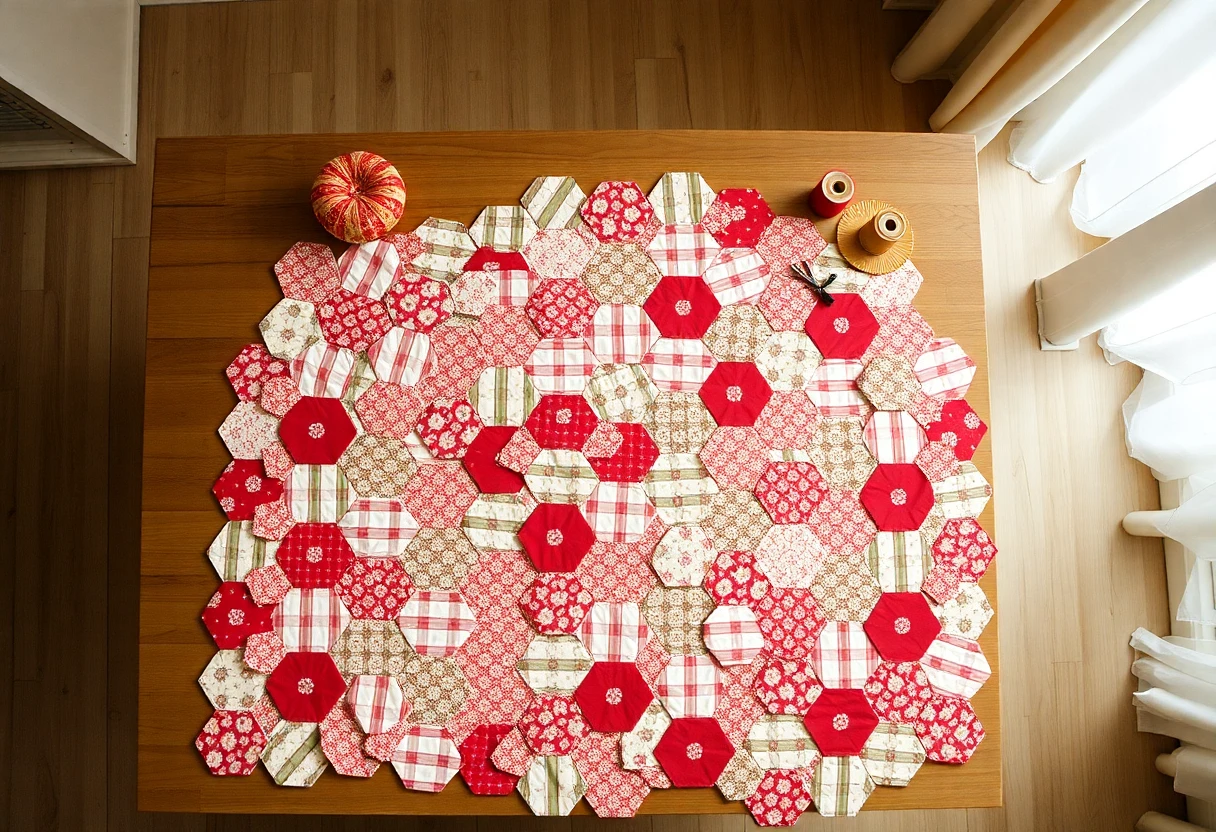 English paper piecingWrap fabric around paper shapes, baste with thread or glue, then stitch the edges together by hand.
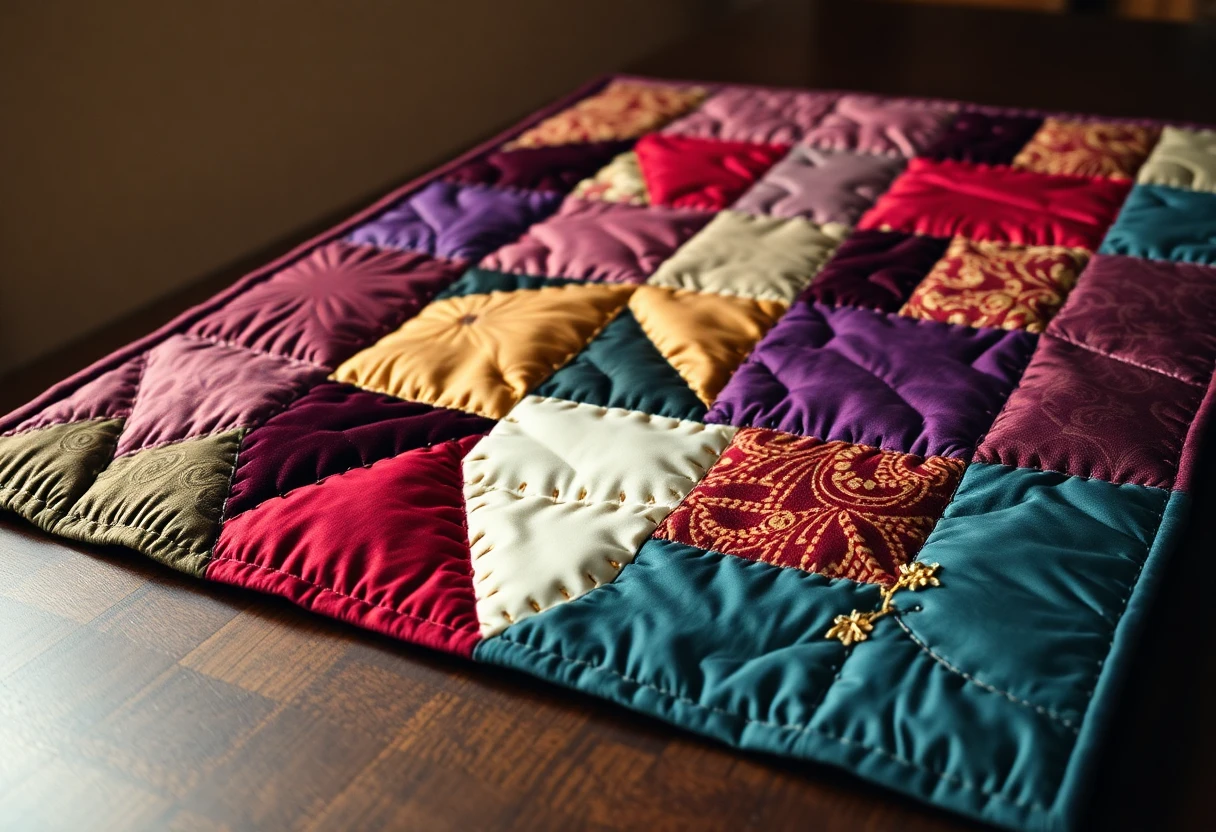 How to make a crazy quiltOdd-shaped scraps sewn to a foundation, then every seam covered with embroidery.
 How to baste a quiltBuilding the quilt sandwich and holding it together with pins, spray or thread, with sizes and spacing.
 Quilt as you go: joining quilted blocks with stripsQuilting each block on its own, then joining them with narrow front and back strips, with exact cut sizes.