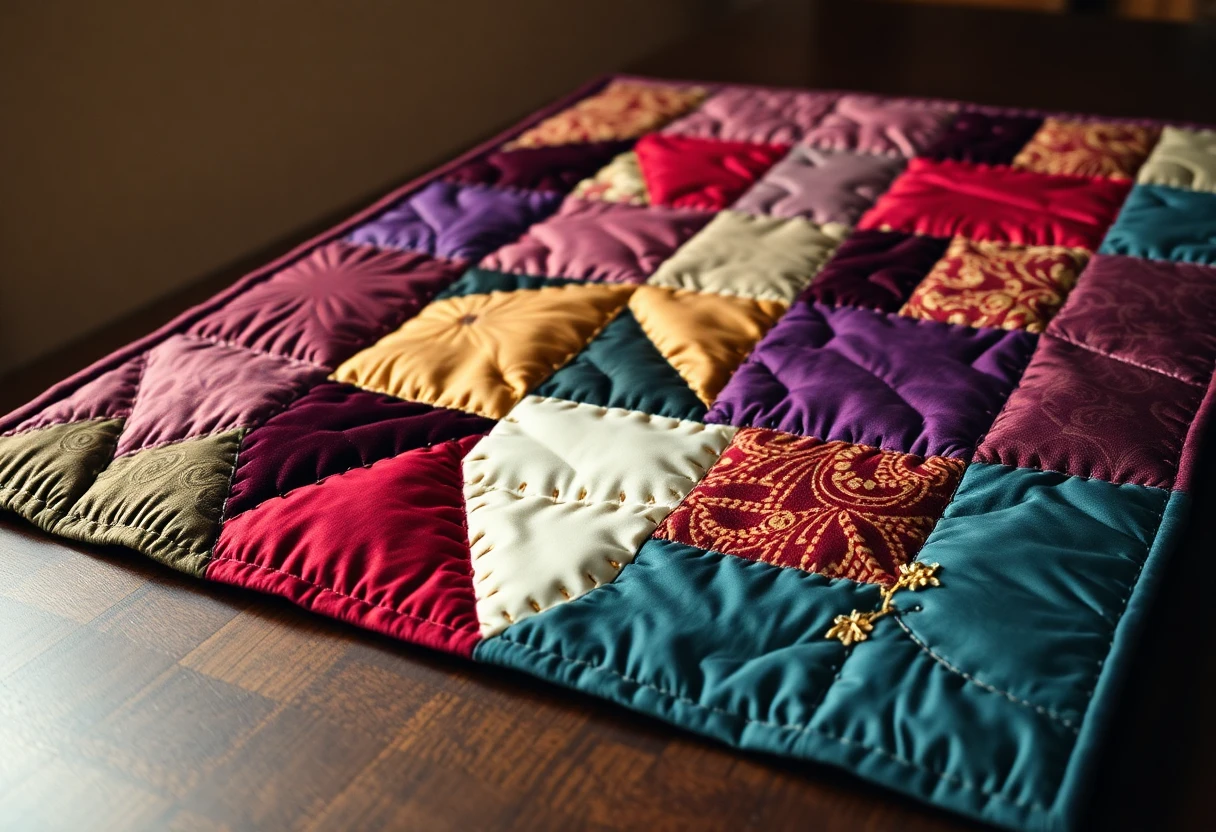
What you need
- Muslin or other light cotton for the foundations, cut into squares a little larger than your finished block (a 13-inch square for a 12-inch block).
- Scraps of almost anything: cotton, silk, velvet, satin, old neckties, lace. Mixing textures is the point.
- Embroidery floss or perle cotton in colors that stand out against the patches, and an embroidery needle.
- Optional: buttons, beads, ribbon and charms for a wall quilt (leave them off anything for a baby).
Piece a block: stitch and flip
- Cut a five-sided piece of fabric and pin it near the center of the foundation, right side up. A five-sided start piece keeps the block from looking like a log cabin.
- Lay a second scrap on top of it, right sides together, along one edge. Sew through both scraps and the foundation with a ¼-inch seam.
- Flip the second scrap open and press it. Trim any part of it that reaches past the edge you'll sew next.
- Keep going around the center, adding scraps along the straight edges you've created. Each new piece must cover the raw edges of the last ones.
- When the foundation is covered, press the block and trim it square to 12½ inches.
Slippery fabrics like silk and satin behave better if you fuse a lightweight interfacing to the back before you cut them. Velvet should be pressed face down on a towel so the pile doesn't flatten.
Embroider the seams
Embroidery is what makes a crazy quilt. Cover every seam line with a decorative stitch, varying the stitch and the thread color from seam to seam. Stitches that work well:
| Stitch | What it looks like |
|---|---|
| Feather stitch | A branching line, like a fern, that zigzags along the seam |
| Herringbone | Crossed stitches that make a lattice over the seam |
| Blanket stitch | Evenly spaced upright stitches joined along one side |
| Chain stitch | A line of linked loops |
| Lazy daisy | Single loops arranged as small flowers, often added along a stitched line |
Work the embroidery on each block before you join the blocks; it's much easier to handle a single block in a hoop than a whole quilt.
Put the quilt together
Sew the finished blocks into rows and join the rows, then embroider over the seams between blocks too, so the quilt looks continuous. Traditional crazy quilts often have no batting: a backing fabric is tied to the top at the block corners, and the edges are finished with binding. For a warmer throw, add a thin batting and tie or quilt by hand between the embroidered seams.
A 4 × 5 layout of 12-inch blocks makes a 48 × 60 inch throw. A single block framed with a border makes a pillow or a wall hanging, which is a good way to try the technique first.
Crazy quilts as keepsakes
Any fabric works in a crazy quilt, so it's a good home for a loved one's ties, dresses or wedding fabrics that would fight each other in a pieced pattern. Our guide to memory quilts from clothes covers preparing garments. To finish and label your quilt, see how to bind a quilt and how to label a quilt.
You might also like
 How to hand quiltBetweens, thread, hoop and thimble, then the rocking stitch and how to hide every knot.
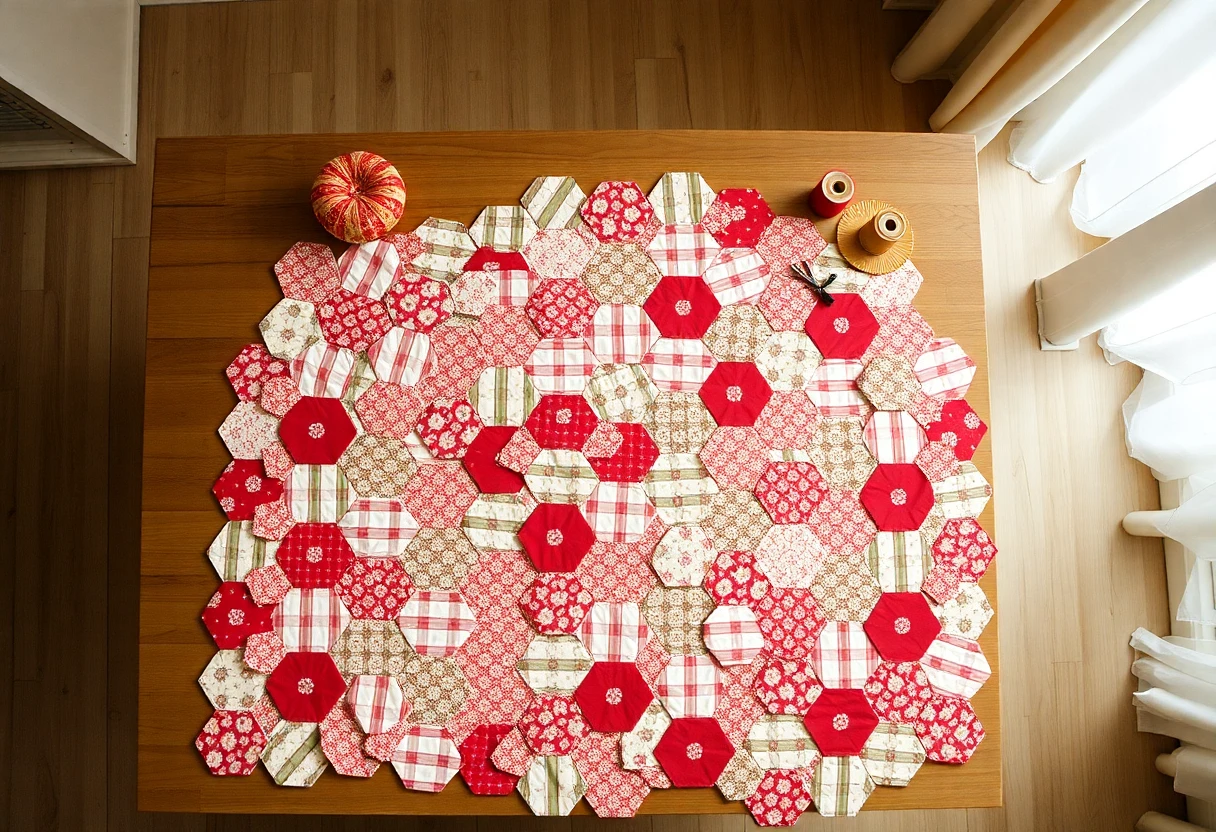 English paper piecingWrap fabric around paper shapes, baste with thread or glue, then stitch the edges together by hand.
 How to sew an accurate quarter-inch seamThe scant quarter inch, a three-strip test that tells you if your seam is right, and how to press it.
 Quilt as you go: joining quilted blocks with stripsQuilting each block on its own, then joining them with narrow front and back strips, with exact cut sizes.