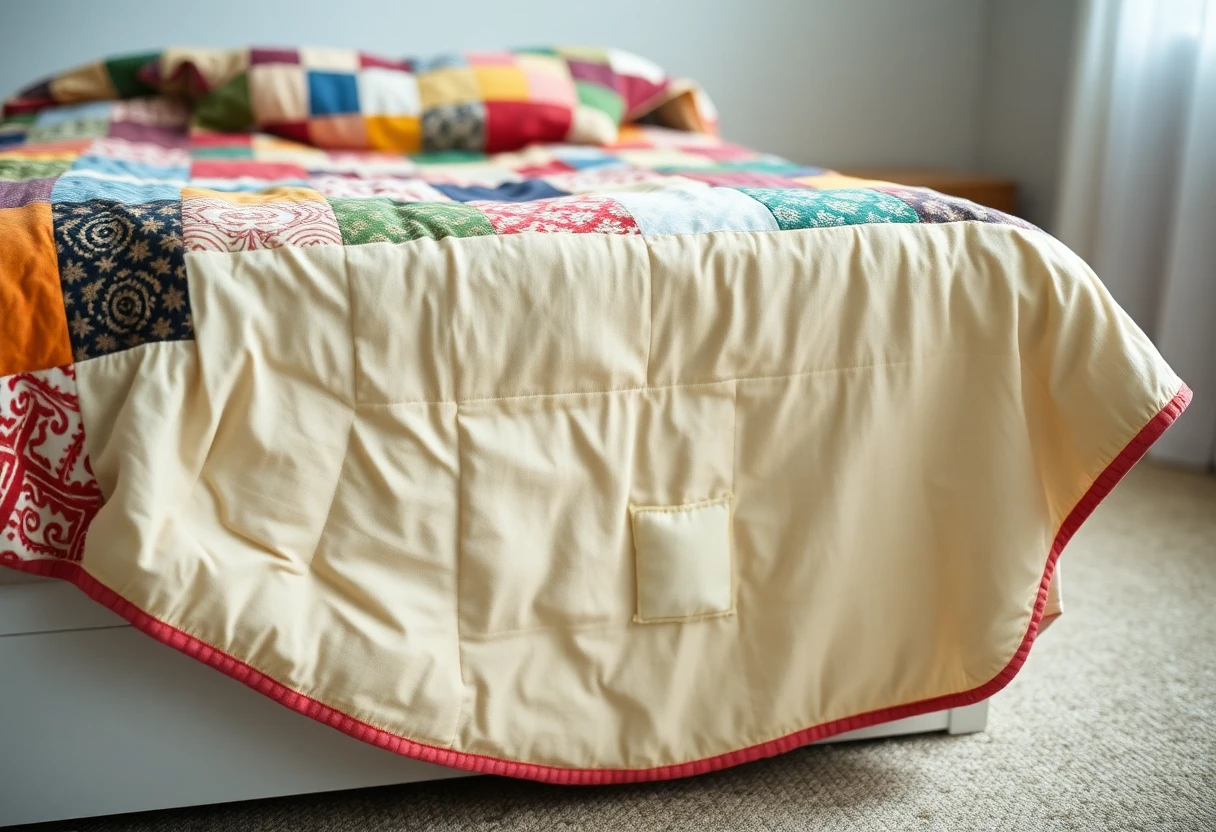
What to put on it
At a minimum: your name, the city and state, and the year. Beyond that, add what you'd want a grandchild to know:
- The quilt's name or the pattern
- Who it was made for and the occasion
- Who quilted it, if someone else did the quilting
- The date it was given
- Washing instructions, if the quilt needs special care
Memorial and charity quilts often have their own requirements. A Quilt of Valor's label, for example, must say it is a Quilt of Valor, and the Foundation asks for the recipient's name, the names of the piecer, quilter and binder, and the date and place of the award, with no religious or political messages. See our Quilts of Valor guide.
Four ways to make a label
Write it by hand
Iron freezer paper (shiny side down) to the back of a piece of light cotton so it doesn't shift, then write with a pen made for fabric that gets washed. A laundry marker such as the Sharpie Rub-a-Dub is sold for exactly this: its listing says the ink stays permanent through washing and dry cleaning. Many quilters reach for a Sakura Pigma Micron 05 instead because the fine tip is easier to write neatly with, but Sakura itself lists fabric as “decorative use only” and says the pen is not recommended for fabrics intended to be washed. Save it for a wall quilt, or test it first. Whichever pen you use, write on a scrap of the same fabric, wash the scrap a couple of times, and only then write the real label. It's quick and personal, and your handwriting is part of the record.
Embroider it
Backstitch the words by hand, or use the lettering on an embroidery machine. Embroidery lasts longer than ink through years of washing.
Print it
Printable fabric sheets have a paper backing so they feed through an inkjet printer. Read the package before you buy: some are sold for crafts and say plainly that they aren't machine washable, which rules them out for a quilt that will be washed. Look for sheets that say they're washable, and follow their instructions for setting the ink.
Cross-stitch it
For a quilt made by a needlework group, a small cross-stitched label fits the spirit of the thing. The 9-11 project was built entirely from cross-stitched squares.
How to attach it
The neatest method is to catch the label in the binding. Cut a square of fabric, fold it in half diagonally to make a triangle, and pin it to a corner of the backing before you sew on the binding. The binding holds two edges, and you hand stitch the folded edge down.
A label added after the binding goes on with an appliqué stitch: press the raw edges under ¼ inch and hand stitch it to the backing, catching only the backing so no stitches show on the front. The lower right corner of the back is the traditional spot.
For a quilt you expect to be handed down, some makers sew the label on before quilting, so the quilting stitches go through it and it can't be removed. That also discourages anyone from taking the label off a stolen quilt.
Finishing a quilt? How to bind a quilt covers the binding step.
You might also like
 How to sew an accurate quarter-inch seamThe scant quarter inch, a three-strip test that tells you if your seam is right, and how to press it.
 Quilts of Valor: requirements and how to make oneThe Foundation's size, fabric and label rules in plain English, plus a pattern that fits them.
 How to bind a quiltDouble-fold binding from cutting strips to mitered corners and an invisible join.
 English paper piecingWrap fabric around paper shapes, baste with thread or glue, then stitch the edges together by hand.