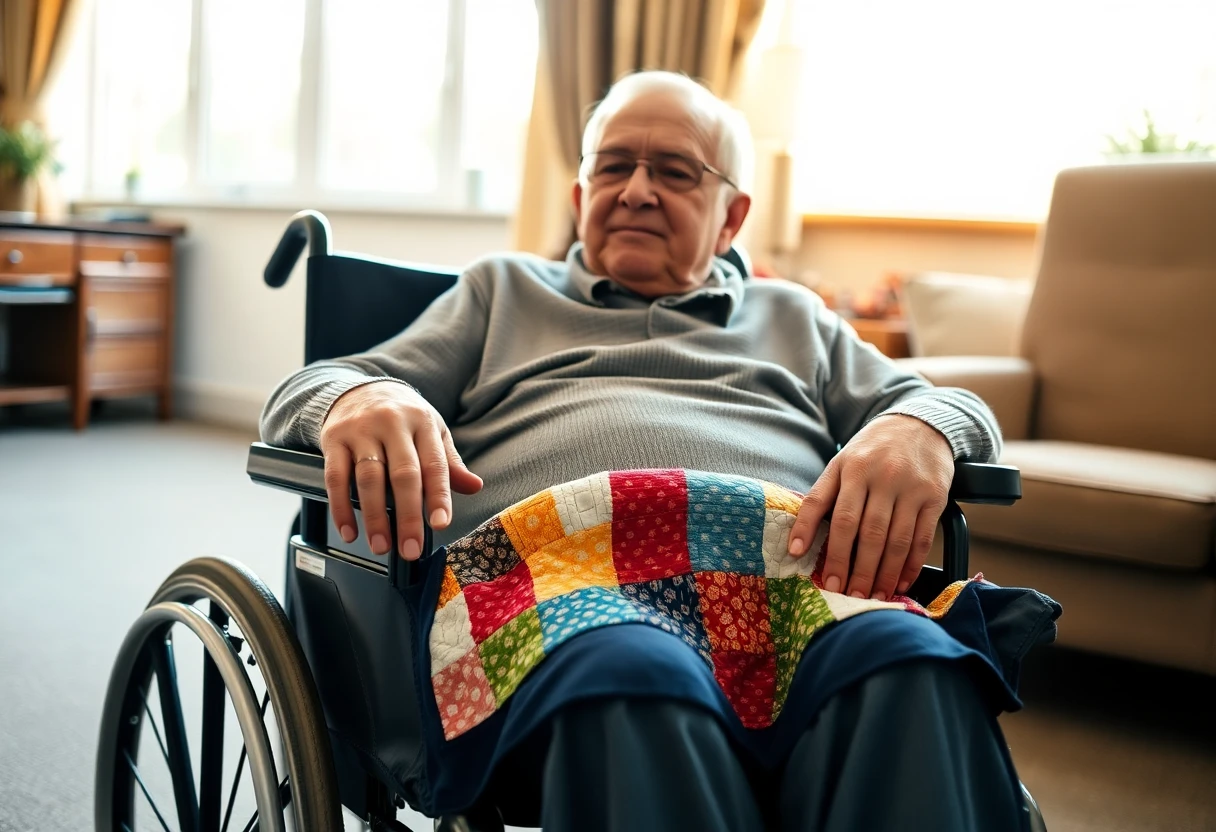
What size do donation programs ask for?
There is no national standard; each facility sets its own list. Two published examples show the range:
- WakeMed Health and Hospitals' volunteer donation form (revised August 2024) lists lap blankets sized to fit across a patient's lap in a wheelchair at 40 × 40 inches, medium adult quilts at 40 × 45 and large adult quilts at 45 × 65.
- UHD Hospice's hospice quilt guidelines ask for 65 × 40 inches, which it calls "a bit larger than a typical lap robe but not intended to be a bed covering." Labels are optional; if you add one, it suggests a back corner.
The main pattern matches WakeMed's 40 × 45 medium size, and the size table gives the 40 × 40 wheelchair size and the 40 × 65 hospice size. Before you make a batch, call the facility's volunteer office and ask what size and fibers they want, and whether they can take quilts at all. Our guide to where to donate quilts lists programs and what they accept.
A note on Quilts of Valor: their quilts must be at least 55 × 65 inches (60 × 80 is recommended) and must be quilted, not tied, according to the foundation's basic requirements. A lap quilt this size doesn't qualify as a Quilt of Valor. If you want to honor a veteran, see our Quilts of Valor guide; for veterans in a VA facility or hospice, a red, white and blue lap quilt is still a welcome gift through the facility's volunteer office.
Design rules for a wheelchair quilt
- No buttons, beads, charms, yo-yos, ribbons, ties, fringe, prairie points or raw-edge appliqué. Anything that can come off can be swallowed or lost, and anything that dangles can catch in a wheel or a bed rail.
- Width about 40 inches. Wider than that and the sides hang down past the wheels.
- Cotton fabric washed before cutting, so the quilt doesn't shrink and bleed in its first hot wash. Expect a donated quilt to be laundered often and dried hot.
- Quilted, not tied, and quilted closely enough for the batting you use (the package gives the maximum distance between lines). Ties can be picked loose.
- Cheerful, easy-to-see colors and prints. Many people in care homes have weak eyesight; strong contrast reads better than subtle tone-on-tone.
- Machine-sewn binding, or binding hand-finished with small, close stitches. A loose binding is the first thing to fail.
Fabric (40 × 45 in)
| Fabric | Used for | Amount |
|---|---|---|
| Prints | 42 squares, 5½ in | Six 5½-in strips, or 5 fat quarters |
| Border and binding | Four 5½-in strips and five 2½-in strips | 1 yd |
| Backing | Two 48-in lengths, seamed (or see below) | 2¾ yd |
| Batting | At least 48 × 53 in | Throw size (60 × 60 in) |
To save backing fabric, buy 1½ yd and sew a 9-inch-wide strip of leftover fabric, pieced to 53 inches long, down one side. That makes about 48½ × 54 inches, enough for a 40 × 45 quilt. Scrappy backs are normal on charity quilts.
Cutting
- Prints: cut 42 squares, 5½ × 5½ inches. A strip 5½ inches across the width of the fabric gives 7 squares; a fat quarter gives 9 (3 × 3).
- Border fabric: cut 4 strips 5½ inches and 5 strips 2½ inches, all across the width of the fabric.
Sew the top
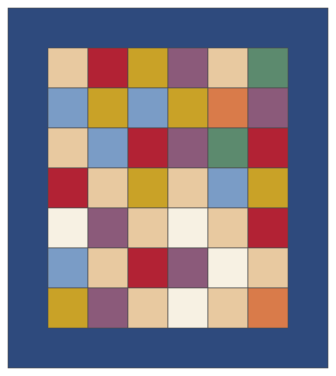
- Lay out 7 rows of 6 squares. Spread the colors so no two matching squares touch.
- Sew the squares into rows with ¼-inch seams. Press the seams in odd rows to the left and even rows to the right.
- Sew the rows together, nesting the seams. The center measures 30½ × 35½ inches.
- Join the four border strips end to end. Cut two pieces 35½ inches long and sew them to the sides. Cut two pieces 40½ inches long and sew them to the top and bottom. The top measures 40½ × 45½ inches.
The border isn't decoration only: it gives the binding a plain edge to sew through, and on a quilt that will be tucked and pulled every day, the border takes the wear instead of the seams.
Quilt and bind
- Layer the backing (right side down), batting and top, and baste. How to baste a quilt covers pins and spray.
- Quilt straight lines in the ditch along every row and column, which spaces the lines 5 inches apart, and add a line or two around the border. Check that 5 inches is within your batting's limit. Diagonal lines through the squares are a sturdy alternative. Straight-line machine quilting explains how with a walking foot.
- Trim the batting and backing even with the top.
- Join the five binding strips into one (about 198 inches; the quilt needs 170 inches plus about 10 for corners and the join). Fold it in half lengthwise and press, then sew it to the quilt. For a donated quilt, consider sewing the binding entirely by machine: stitch it to the back first, wrap it to the front and topstitch. How to bind a quilt shows both methods.
- Add a label on the back if the program allows: your guild's name or yours, the date, and a line like "Made for you with care." Write with a permanent fabric pen and heat-set it.
Other sizes
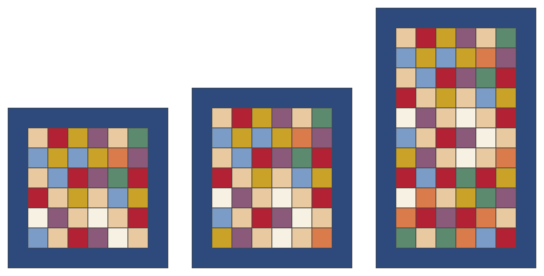
| Size | Squares | Print strips or fat quarters | Border pieces (cut 5½ in wide) | Binding strips | Border and binding fabric | Backing |
|---|---|---|---|---|---|---|
| 40 × 40 in (wheelchair) | 36 (6 × 6) | 6 strips or 4 fat quarters | Two 30½ in, two 40½ in | 5 | 1 yd | 2¾ yd (two 48-in lengths) |
| 40 × 45 in (this pattern) | 42 (6 × 7) | 6 strips or 5 fat quarters | Two 35½ in, two 40½ in | 5 | 1 yd | 2¾ yd (two 48-in lengths) |
| 40 × 65 in (hospice) | 66 (6 × 11) | 10 strips or 8 fat quarters | Two 55½ in, two 40½ in | 6 | 1¼ yd | 2¾ yd (two 48-in lengths) |
For a guild work day, the 40 × 45 size splits neatly: one person cuts squares from a pile of donated fabric, two sew rows, one adds borders, and the quilting and binding go home with volunteers. If you want something a little more patterned in the same size, the 6-inch rail fence block makes a 30 × 36 center (5 × 6 blocks) that takes the same 5-inch border to 40 × 46. Before you wash a finished stack, our guide on how to wash a quilt covers color catchers and drying.
This site began with a group of volunteers who stitched squares so strangers could be comforted by a quilt; a stack of lap quilts for the local care home is the same idea on a small scale. More free patterns: see them all. This pattern is free for personal and charity use; please don't sell the pattern itself.
You might also like
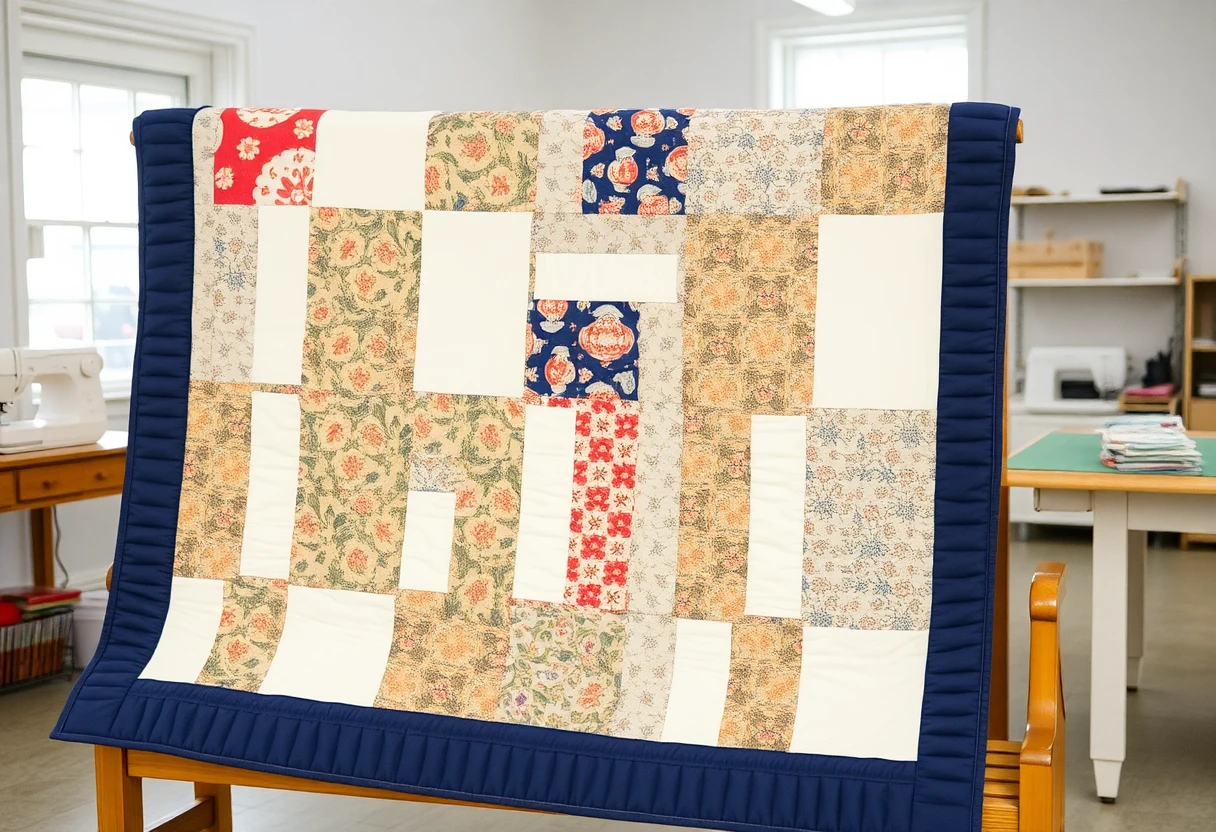 Disappearing nine-patch quiltA plain nine-patch cut in quarters and turned, which looks far harder than it is; 20 blocks from charm squares for a 62 x 75 in throw.
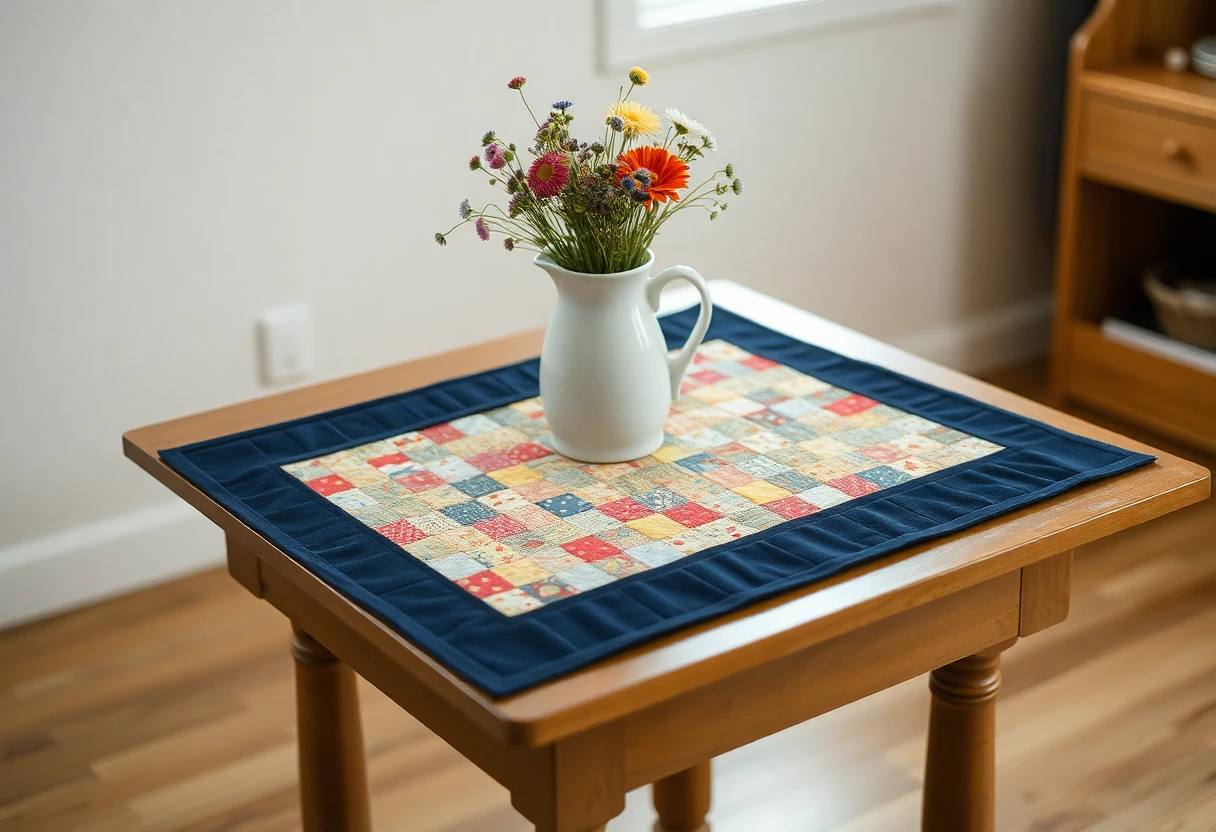 Easy quilted table runner in any lengthRows of 4-inch squares with a navy border, sized for any table from 48 to 96 inches long.
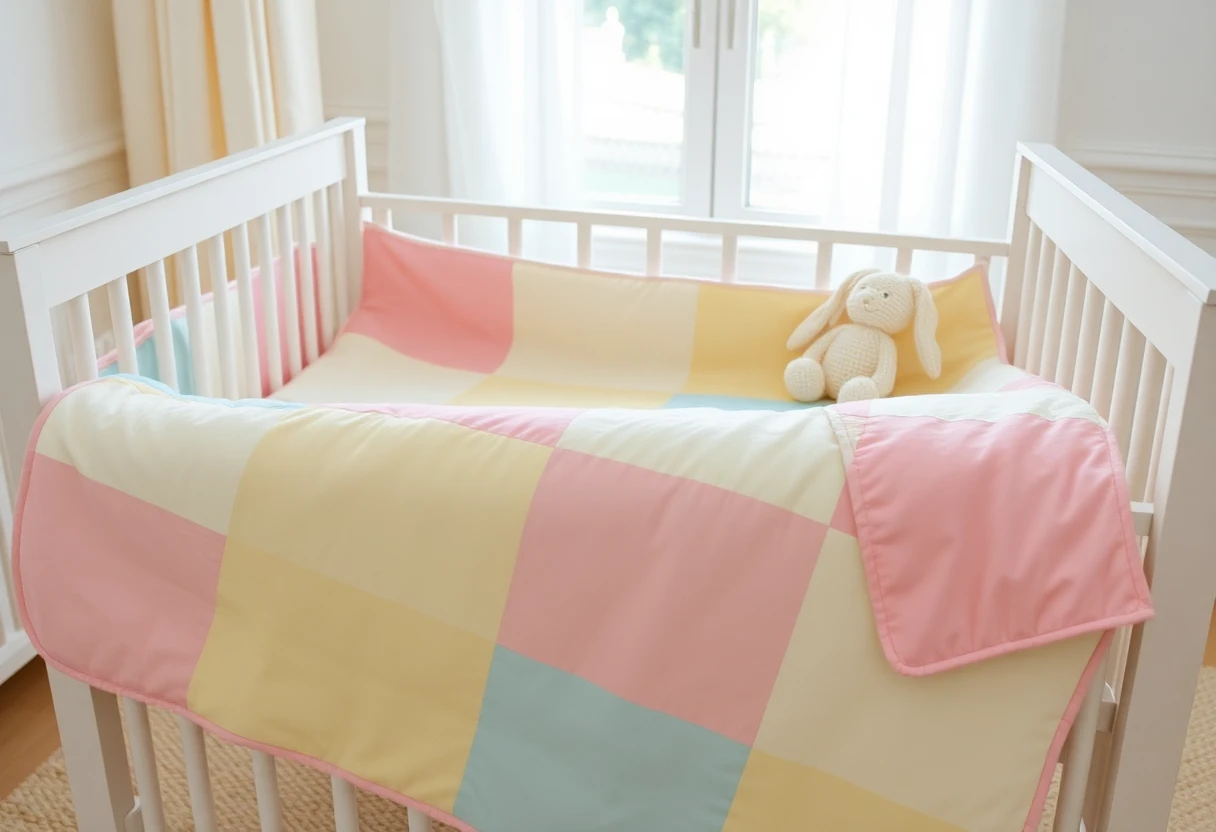 Easy baby quilt48 big squares from 8 fat quarters, 36 x 48 in, with crib, toddler and throw sizes.
 Pinwheel baby quiltOne charm pack, 20 pinwheels, 38 x 46 in, a step up from a squares-only baby quilt.