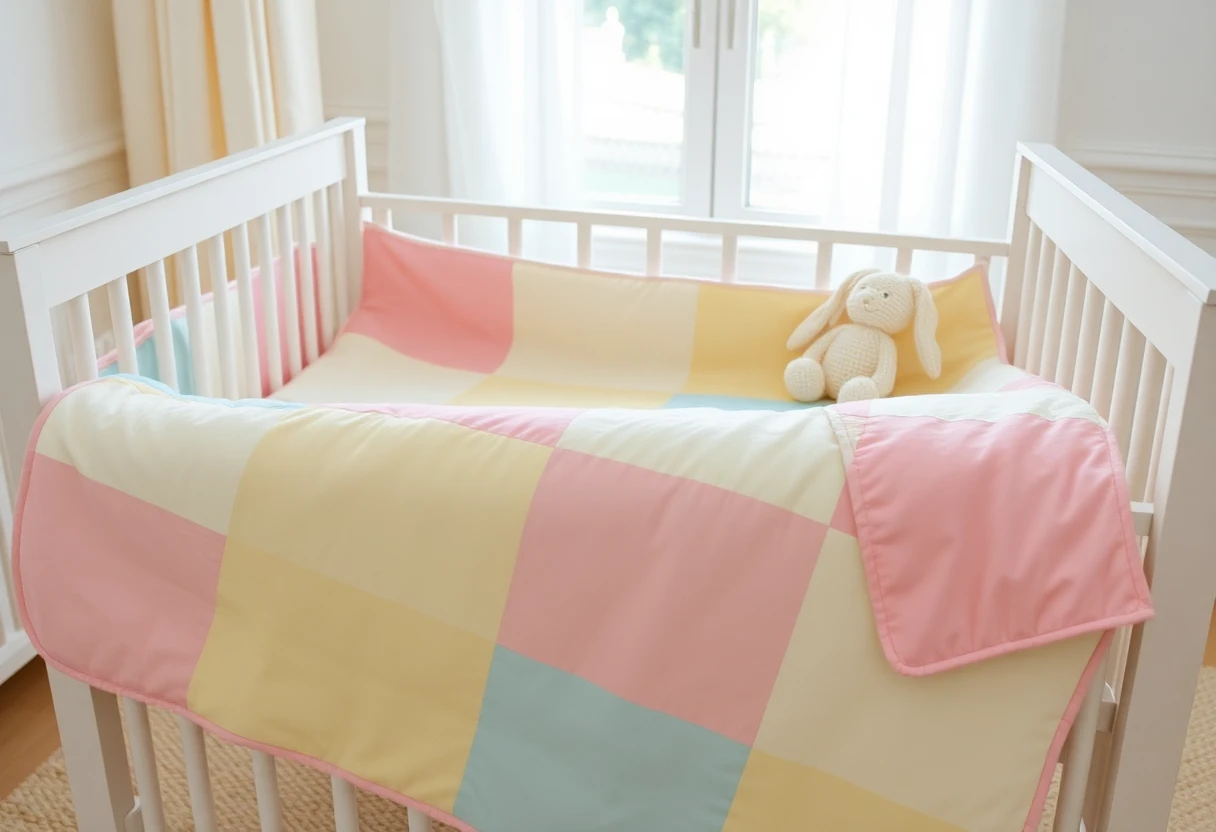

Fabric
| Fabric | Amount | Notes |
|---|---|---|
| Prints for the squares | 8 fat quarters, or 4 prints at ⅜ yd each | Each fat quarter (18 × 21 in) gives 6 squares; each ⅜-yd cut gives 12 |
| Binding | ⅜ yd | Five 2½-in strips |
| Backing | 1⅝ yd | 44-in-wide fabric, or a 45 × 56 in piece of wide flannel or minky |
| Batting | Crib size (45 × 60 in) | Cotton or 80/20 washes softest |
Fat quarters vary by a half inch or so. If yours measure under 19½ inches in one direction after squaring up, you'll get 4 squares instead of 6; buy one extra.
Cutting
From each fat quarter, cut two strips 6½ inches wide along the 21-inch side, then cut each strip into three 6½-inch squares. (From ⅜-yard cuts, cut two 6½-inch strips across the width and subcut 12 squares.) You need 48 squares in all. Cut five 2½-inch strips from the binding fabric.
Sew the top
- Lay the squares out 6 across and 8 down. Spread each print around so no two of the same fabric touch, and photograph the layout before you pick it up.
- Sew each row of 6 squares with a ¼-inch seam.
- Press the seams in row 1 to the left, row 2 to the right, and keep alternating. When you join the rows, the seams nest and the corners line up without much pinning.
- Sew the rows together. The top should measure 36½ × 48½ inches.
Quilt and finish
A diagonal grid through the squares, sewn with a walking foot, holds the layers firmly enough for constant washing. So does straight-line quilting ¼ inch from every seam. Keep the quilting lines no more than the batting package's recommended spacing apart (often 8 to 10 inches for cotton), or the batting can shift in the wash.
Bind by machine. Hand-finished binding is lovely, but a baby quilt gets washed often, and machine stitching holds up better. See how to bind a quilt, then add a label with the baby's name and birth date.
Baby-safe choices
- Skip buttons, beads and charms; anything sewn on can come off and become a choking hazard.
- Prewash flannel and any red or dark prints so they shrink and bleed before they're sewn next to white.
- Use a cotton or cotton-blend batting; it breathes better than all-polyester.
- A quilt is for play mats, strollers and decoration. Follow current safe-sleep guidance from your pediatrician about soft bedding in the crib.
Other sizes
| Size | Layout | Squares | Fat quarters | Finished |
|---|---|---|---|---|
| Small baby or stroller | 5 × 6 | 30 | 5 | 30 × 36 in |
| Crib (this pattern) | 6 × 8 | 48 | 8 | 36 × 48 in |
| Toddler | 7 × 9 | 63 | 11 | 42 × 54 in |
| Throw | 8 × 10 | 80 | 14 | 48 × 60 in |
Larger sizes need more binding and a bigger backing. StitchTested's binding and backing calculator works them out from the finished size.
More free patterns: see them all. This pattern is free for personal use and for charity quilts. Please don't sell the pattern itself.