
How many shirts you need
One shirt usually gives one block. Using 14-inch blocks with 2-inch sashing between the blocks and around the outside:
| Layout | Shirts | Finished size | Good for |
|---|---|---|---|
| 3 × 4 | 12 | 50 × 66 in | Throw or lap quilt |
| 4 × 5 | 20 | 66 × 82 in | Twin bed or a large throw |
| 5 × 6 | 30 | 82 × 98 in | Queen bed |
Short on shirts? Cut two smaller blocks from the back of a shirt, or fill gaps with plain blocks of a coordinating cotton. Pockets, collars and buttons can go on as decoration.
Prepare the clothes
Wash and dry everything first, without fabric softener. Then cut each garment apart along the seams so it lies flat, and cut a generous square around the part you want to keep, about 2 inches bigger than the finished block.
T-shirts and other knits stretch, and stretchy fabric won't sew to woven quilting cotton without puckering. The fix is fusible interfacing on the back of every knit square. Woven interfacing (the kind with a fabric-like weave, often sold for shirt collars) keeps the quilt softer than nonwoven types. Pellon SF101 Shape-Flex is the one most T-shirt quilt instructions name: a 100% cotton woven fusible for light to medium-weight fabric, sold by the yard. Fuse it with a press cloth so the iron never touches a screen print, then trim the square to its exact cut size: 14½ inches for a 14-inch block.
Woven clothes (flannel, dress shirts, cotton dresses) don't need interfacing. Lightweight or loosely woven ones do better with it, though.
Mixing fabrics
Denim is heavy, so pair it with other sturdy fabrics and use a 90/14 or denim needle. Flannel shrinks more than quilting cotton; prewash any flannel you add. Silky fabrics, like neckties and blouses, slide around; fuse interfacing to them as well. Delicate baby clothes may work better as appliqué pieces stitched onto cotton squares than as whole blocks.
Lay out and sew
Lay the blocks out on a floor and move them until no two similar colors or logos sit side by side. Sew 2½-inch sashing strips (2 inches finished) between the blocks in each row, then long sashing strips between the rows. Sashing in a single solid color calms down busy shirts and makes uneven blocks easier to line up. Our T-shirt quilt pattern has the exact cutting and yardage for 12, 20 or 30 shirts.
Finish it
Memory quilts get heavy, so a thin cotton or 80/20 batting is usually enough. A walking foot helps with quilting through interfacing and seams; straight lines along the sashing are simple and don't cross the logos. Bind it (see how to bind a quilt), and don't skip the label: whose clothes they were, who made the quilt and when.
If the clothes are irreplaceable, practice the whole process on a couple of thrift-store shirts first, so your first scorch mark or crooked cut lands on a shirt nobody will miss.
Making a memorial quilt from squares sent by many people instead? Read how to organize a memorial quilt.
Products on this page
Photos and prices come from Amazon and can change.
 Pellon SF101 Shape-Flex Fusible Woven InterfacingCheck price on Amazon
You might also like
 Quilts of Valor: requirements and how to make oneThe Foundation's size, fabric and label rules in plain English, plus a pattern that fits them.
 Drunkard's path quilt blockOne quarter-circle unit, a curved seam sewn with pins, and eight layouts from the same pieces.
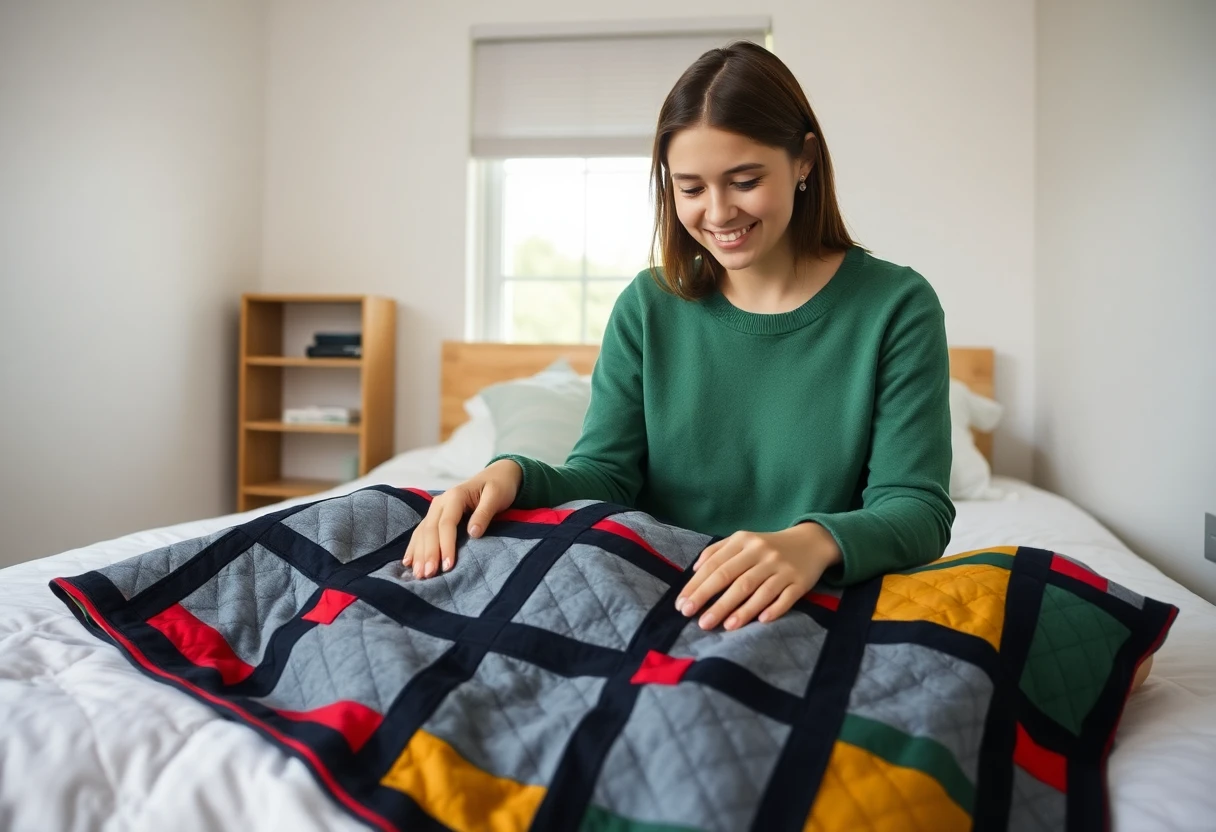 T-shirt quilt with sashing14-in shirt blocks framed by sashing and cornerstones, with yardage for 12, 20 or 30 shirts.
 T-shirt quilt calculatorThe layouts your shirts can fill, with the finished size and the fabric to buy.