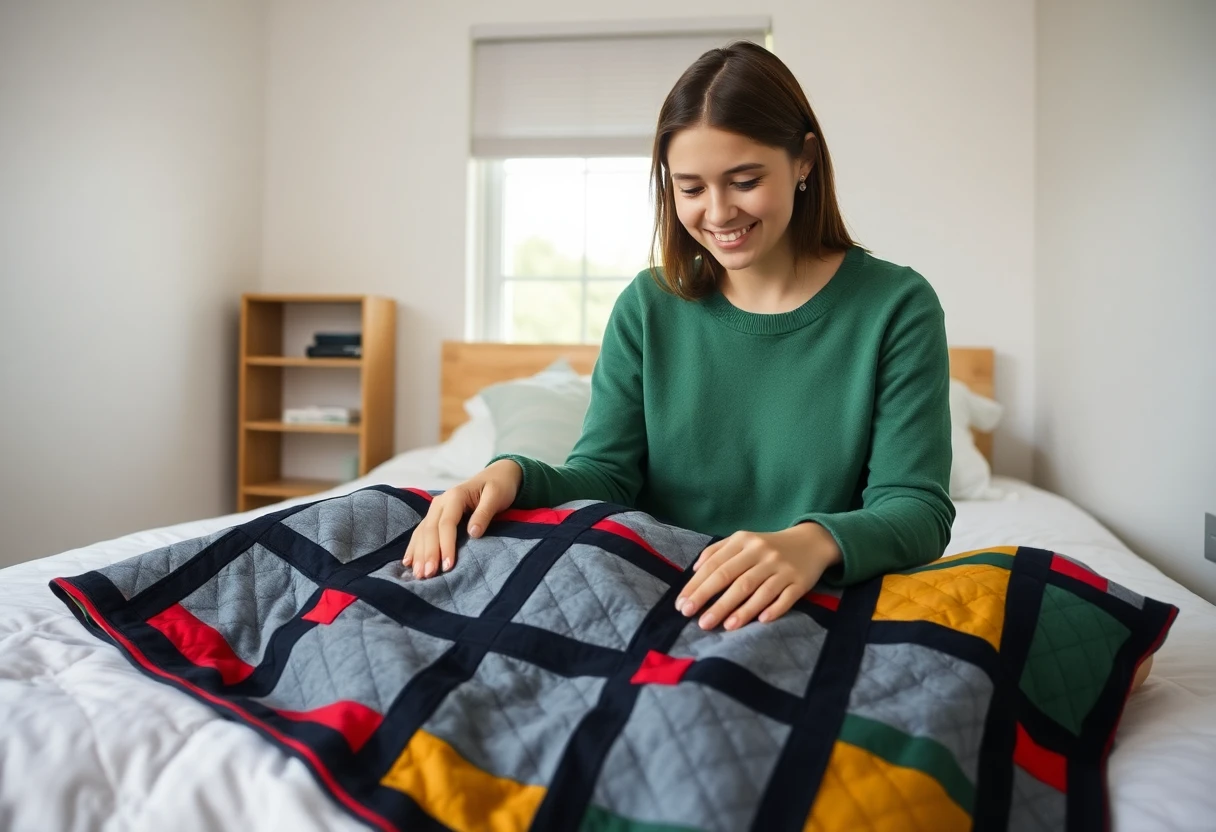

For the bigger questions (choosing shirts, mixing in flannel or denim, using a loved one's clothes), see how to make a memory quilt from clothes. This page is the pattern itself.
Pick a size
| 12 shirts | 20 shirts | 30 shirts | |
|---|---|---|---|
| Layout | 3 × 4 | 4 × 5 | 5 × 6 |
| Finished size | 50 × 66 in (throw) | 66 × 82 in (twin) | 82 × 98 in (queen top) |
| Fusible interfacing | 5 yd | 8⅓ yd | 12½ yd |
| Sashing | 1¼ yd | 1⅞ yd | 2⅝ yd |
| Cornerstones | ¼ yd | ¼ yd | ⅓ yd |
| Binding | ⅝ yd | ⅝ yd | ¾ yd |
| Backing | 3¼ yd | 5 yd | 7½ yd |
| Batting | Twin (72 × 90 in) | Full (81 × 96 in) | Queen (90 × 108 in) |
The interfacing figures assume one 15-inch square per shirt, cut from interfacing at least 15 inches wide, so each shirt uses 15 inches of length. Fabric amounts assume 42-inch-wide quilting cotton with about 40 usable inches.
Prepare the shirts
- Wash and dry every shirt without fabric softener, which can keep the interfacing from sticking.
- Cut each shirt open: up both side seams, across the shoulders and around the sleeves, so the front and back come apart as flat pieces. Keep the back too if it has a print you want.
- Find the biggest print in the pile. It should fit inside a 13-inch square with a little air around it. If one doesn't, make every block bigger (16½-inch cut squares make 16-inch blocks, and the quilt grows by 2 inches per block across and down) rather than cutting into a design.
- Rough-cut a piece about 16 inches square around each print.
Stabilize the knit
T-shirt knit stretches in every direction, and sewing it straight to woven sashing gives wavy seams. Fusing interfacing to the back of every shirt piece stops that. Use a woven fusible: it keeps the quilt drapey, where nonwoven types make it stiff. Pellon SF101 Shape-Flex is the one most T-shirt quilt instructions call for.
- Cut a 15-inch square of interfacing for each shirt.
- Lay the shirt piece face down on the ironing board and smooth it without stretching. Center the interfacing over the print, glue side down.
- Fuse it following the heat and time on the interfacing's instructions. Press and lift the iron rather than sliding it, which would stretch the knit. Never put the iron directly on a screen print; fuse from the back, and use a press cloth if the front has to be pressed.
- Let each piece cool flat before moving it. The glue sets as it cools.
Trim the blocks
A 15-inch square ruler makes this step fast, since one ruler covers the whole block. Turn the shirt piece face up, lay the ruler over it with the print centered (check the space above and below the print as well as at the sides), and trim around all four edges to 14½ inches square. The Omnigrip 15-inch square is a common choice for this. Without one, mark the square with a long ruler and trim with care.
Short on shirts, or have shirts with only a small chest logo? Cut those as 7½-inch squares and sew four together into one 14½-inch block. A plain block of the sashing fabric with a stitched name or date also fills a gap well.
Cut the sashing and cornerstones
Each sashing strip is 2½ × 14½ inches, and you get two from each 2½-inch strip cut across the fabric. Cornerstones are 2½-inch squares, 16 to a strip.
| 12 shirts | 20 shirts | 30 shirts | |
|---|---|---|---|
| Sashing pieces (2½ × 14½ in) | 31, from 16 strips | 49, from 25 strips | 71, from 36 strips |
| Cornerstones (2½ in squares) | 20, from 2 strips | 30, from 2 strips | 42, from 3 strips |
| Binding (2½ in strips) | 7 strips | 8 strips | 10 strips |
A dark solid (charcoal, navy or black) frames bright shirts best. If most of the shirts are dark, a mid gray or the team color works better than black.
Lay out the quilt
Spread the blocks on the floor or a bed. Move them until no two dark shirts or busy prints sit next to each other, and keep the most important shirts toward the middle, where they'll show when the quilt is on a bed. Take a photo, then stack each row in order and pin a numbered note to the first block.
Sew it together
Use a ¼-inch seam throughout and a 90/14 needle, since you're sewing through knit, interfacing and cotton.
- Block rows: start with a sashing piece, then alternate block and sashing, ending with sashing. For a 3-across quilt, that's sashing, block, sashing, block, sashing, block, sashing. Press the seams toward the sashing.
- Sashing rows: start with a cornerstone, then alternate sashing and cornerstone, ending with a cornerstone. Press toward the sashing. You need one more sashing row than block rows.
- Join the rows, starting and ending with a sashing row. The seams nest at every cornerstone because they're pressed in opposite directions; pin at each one so the corners meet.
Shirt pieces are heavier than the sashing, so let the feed dogs do the work and don't pull. If a block has grown a little, pin the ends and the middle and ease it in.
Quilt and finish
T-shirt quilts are already heavy, so a thin cotton or 80/20 batting is plenty. Quilting in the ditch along every sashing seam with a walking foot holds the layers without stitching across anyone's print. If you want more quilting, add lines through the sashing or a loose meander through the shirt fabric, staying off thick screen prints where the needle can skip.
Bind with the 2½-inch strips (see how to bind a quilt), and add a label: whose shirts they were, the years they cover, who made the quilt.
Wash the finished quilt on cold and dry it on low. The prints on older shirts crack under high heat.
See all free quilt patterns. This pattern is free for personal and charity use; please don't sell the pattern itself.
Products on this page
Photos and prices come from Amazon and can change.
 Pellon SF101 Shape-Flex Fusible Woven InterfacingCheck price on Amazon
- Omnigrip 15 x 15 inch Square Quilting RulerCheck price on Amazon
You might also like
 How to make a memory quilt from clothes or T-shirtsTurning a loved one's shirts into a quilt, with layouts, sizes and how to handle stretchy fabrics.
 T-shirt quilt calculatorThe layouts your shirts can fill, with the finished size and the fabric to buy.
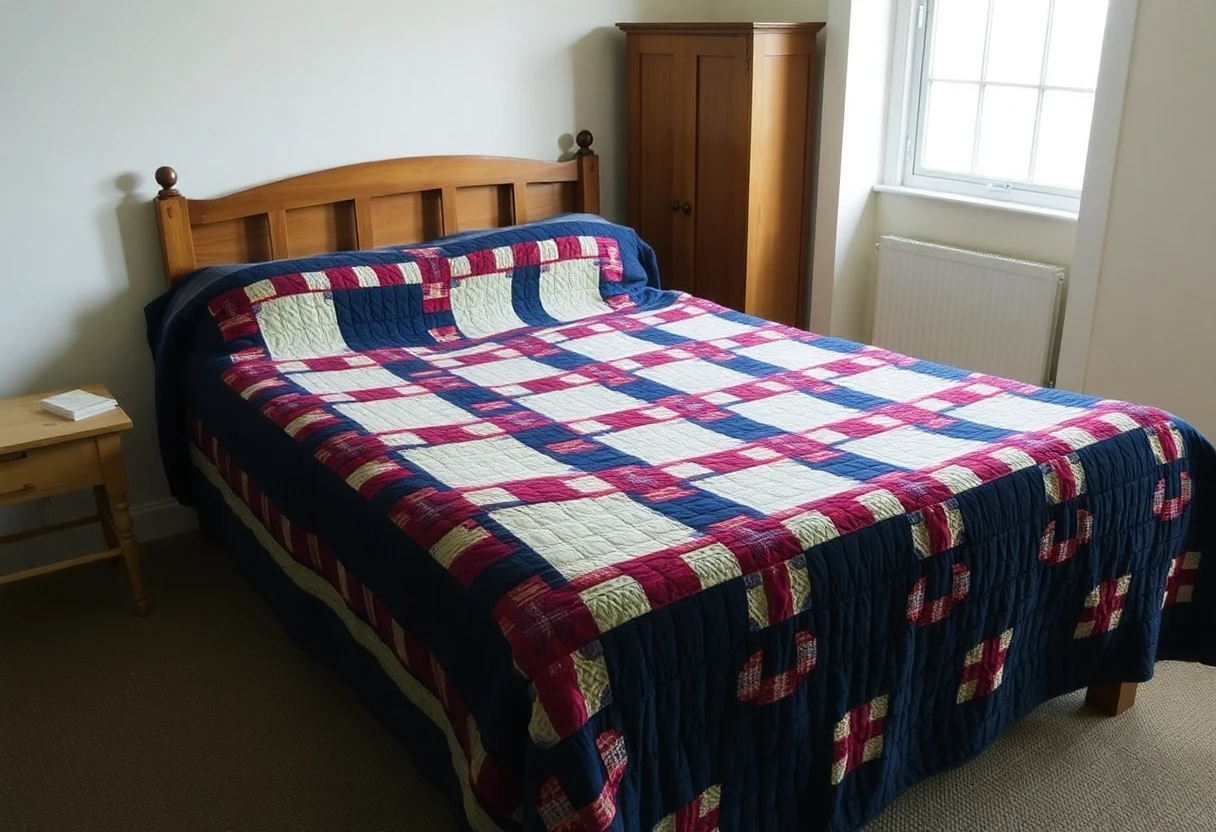 Double Irish chain quiltNavy and red chains on cream, 58 x 78 in, strip pieced so there are no tiny squares to cut one by one.
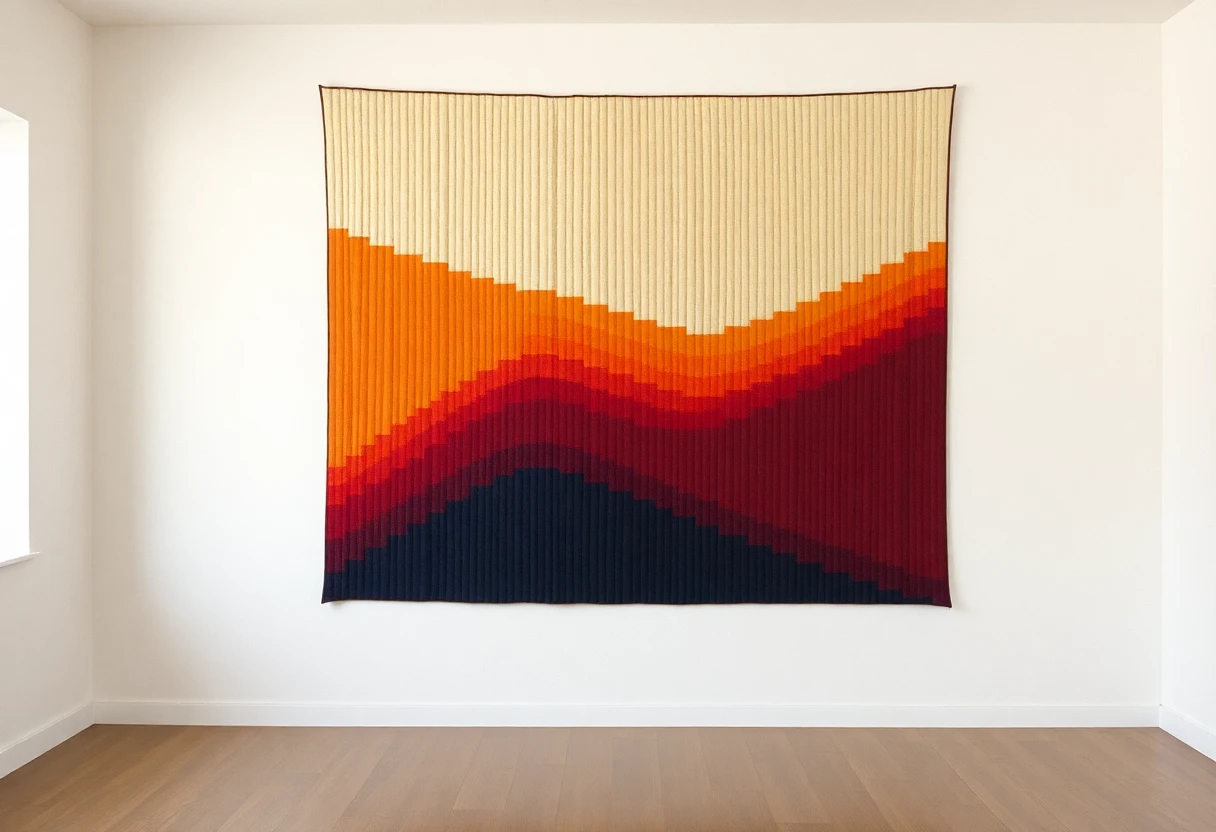 Bargello wave quiltShaded strips sewn into tubes and sliced into columns of different widths that rise and fall in waves; full column-by-column chart for a 60 x 70 in throw.