
1. Decide what the quilt is for and who will receive it
Settle the purpose and the recipient before you ask anyone to stitch. A quilt meant to hang in a firehouse has different size limits than one meant to be given to a family. Contact the recipient early so the finished quilt has a home. The 9-11 quilts spent years traveling partly because the permanent memorials weren’t built yet.
2. Write clear square guidelines
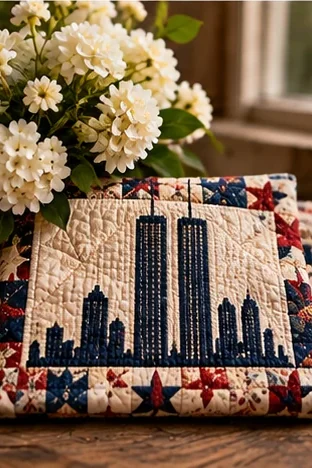
Mismatched squares are the biggest headache in any group quilt, so put the rules in writing before anyone starts. Name one fabric type and color, such as white 14-count Aida. Give a maximum design area and a cut size, for example a design no larger than 5 by 5 inches on fabric cut to 9 by 9, so there's room for seams. Set a palette or theme; the 9-11 project asked for patriotic squares, which kept 524 different designs looking like one quilt.
Add the finishing rules too: no glued embellishments, no fraying edges, washed and pressed before mailing. And ask every stitcher to attach their name and town, so every square can be credited.
3. Spread the word and set a deadline
Online stitching groups, local needlework guilds and quilt shops are the fastest way to find volunteers. Set a firm deadline, but plan for an extension; the 9-11 project moved its first deadline back by six months.
4. Track every square
Keep a simple spreadsheet: stitcher, town, date received, a photo of the square and which quilt it goes on. That list becomes your thank-you list and the quilt’s permanent record. The 9-11 project’s list is why every stitcher can still be credited today.
5. Plan the layout
Lay the squares out on a floor or design wall and photograph each arrangement. Group by color or theme, or give the layout a shape that means something, such as a flag, a state outline or a cross. Count your squares before you commit: a flag layout needs a specific number.
6. Assemble the top
Trim every square to the same size, add sashing strips between them if sizes vary, and sew the squares into rows, then the rows into a top. For very large quilts, build it in sections. Press seams as you go.
7. Quilt, bind and label it
A quilt top larger than a bed usually needs a longarm machine. Ask local quilt shops: many will quilt a memorial piece at cost. Choose a binding fabric with meaning (the 9-11 quilts were bound in fabric printed with the Pledge of Allegiance) and follow our binding guide. Then sew a label on the back with the quilt’s name, dates, the number of squares and stitchers, and who it honors; see how to label a quilt.
8. Present it, and keep a record
Hand the quilt over in person if you can, and publish the list of stitchers so they can see where their work went. Plan for display: large quilts need a hanging sleeve and a stand or rod.
Next: how to stitch a square for a memorial quilt. If you're making the quilt from a loved one's clothes instead, see memory quilts from clothes. For a large quilt, a machine with a wide throat and a walking foot helps; our sister site StitchTested compares sewing machines for quilting.